
- The Japanese Church of Christ celebrates its 100+ year history in Salt Lake City.
- Pastor Andrew Fleishman highlights the unique relationship with the nearby Salt Lake Buddhist Temple.
- A time capsule revealed the church's founding history from Oct. 5, 1919.
SALT LAKE CITY — The Japanese Church of Christ stands as an anchor to historic Japantown, one of the last remaining buildings dedicated to Japanese immigrants who made Salt Lake City their home.
The church, located at 268 W. 100 South, works hand-in-hand with the Salt Lake Buddhist Temple, just half a block east on the same street, to ensure that the Japanese heritage remains alive in downtown Salt Lake City.
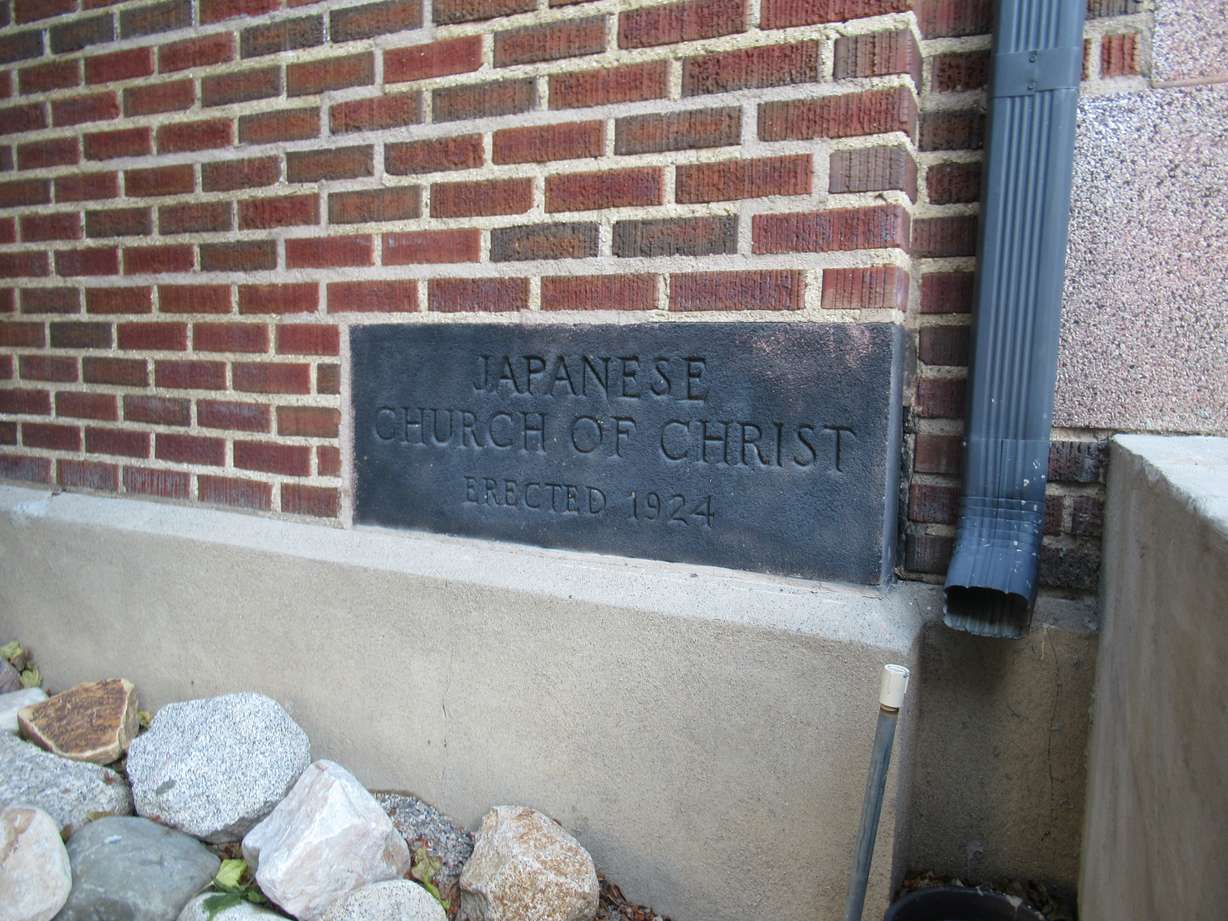
While the original Salt Lake Buddhist Temple building was eventually torn down after moving across the street to its current location, the Japanese Church of Christ has been in the same location for more than 102 years.
Pastor Andrew Fleishman said the relationship between the two organizations, one Protestant and one Buddhist, is "incredibly unique" and strengthened due to the history that both buildings share.
"It's been one of my greatest joys to serve alongside them," Fleishman said. "It's probably one of the coolest, most beautiful relationships I've had as a pastor, to walk alongside as true family and acknowledge and lift up and support each other."
Time capsule with church history
Much of the church's founding history could be found using primary sources sealed away more than a century ago in a time capsule. Fleishman, who became the church's pastor two years ago, put the contents of the time capsule on display for attendees and visitors to examine.
"What's funny is we didn't even know it existed," Fleishman said.
Lorraine Crouse, a trustee of the Japanese Church of Christ and former University of Utah historian, suspected that a time capsule might be within the church and spearheaded a campaign to search for its potential location.
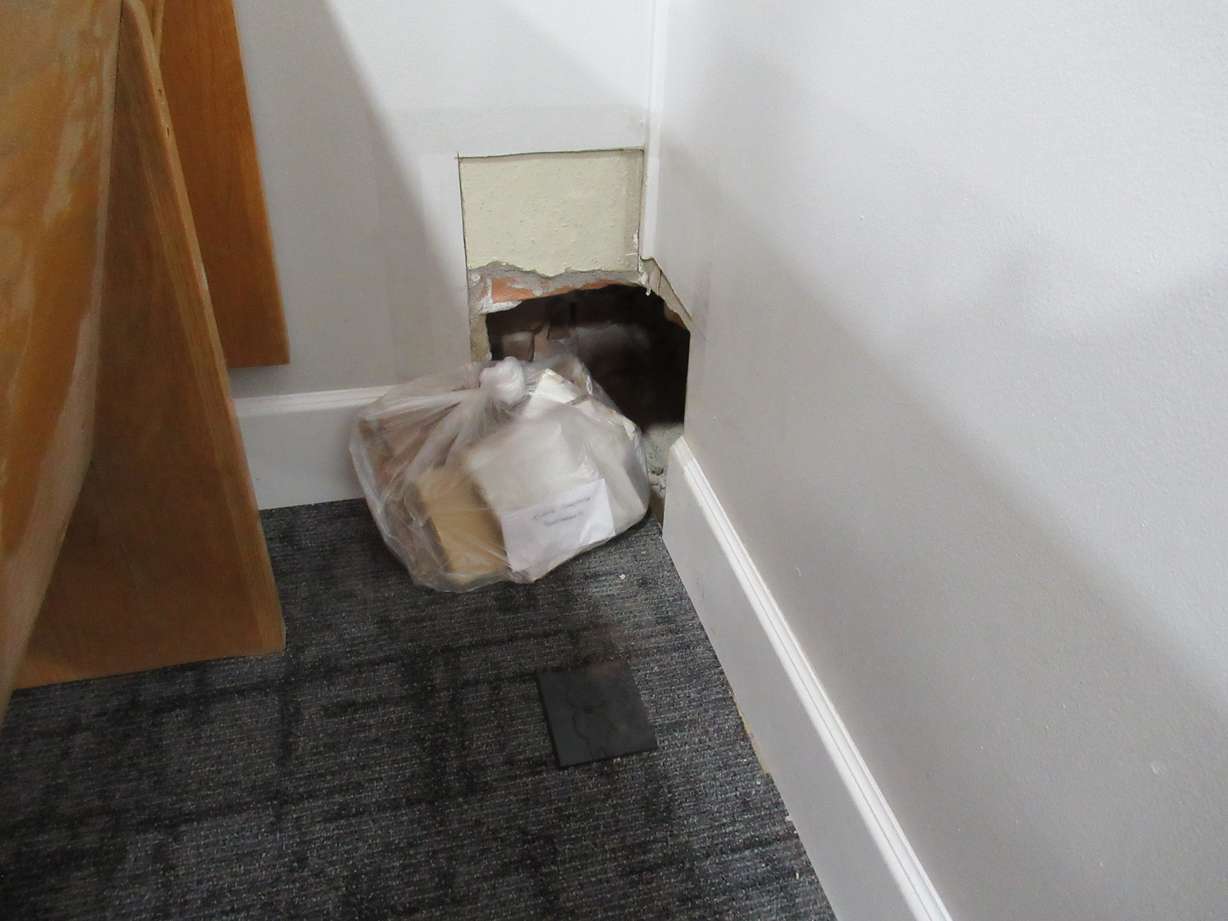
After performing scans, the time capsule was successfully removed from a wall in the basement of the church. A small hole was cut into the wall to help access the capsule, which was left behind and covered by a pew to honor the place where it was hidden.
The drill used to find the time capsule damaged the bronze container and some of the artifacts within, but Fleishman said it was fortunate that several handmade flags within the capsule were not damaged during its recovery.
According to documents found in the time capsule, the church was founded on Oct. 5, 1919, with the help of Presbyterian and Congregational churches in Salt Lake City. The cornerstone for the building was laid in April of 1923, with the building itself completed in January of 1925.
The time capsule was sealed in the walls of the church with multiple documents, several Japanese American newspapers, a Japanese Bible, an English Bible and a pair of handmade flags.
Current state of the church
The Japanese Church of Christ's congregation remains largely Japanese, though other nationalities also attend the services. While many attendees speak Japanese, the services are held in English on Sundays, with the Lord's Prayer spoken in both Japanese and English.
The building is currently home to the original congregation, along with two other religious organizations: the Tongan American Free Wesleyan Church and the Kachin Trinity Church.
The building has been well-maintained, according to Fleishman, and he said the stained glass window at the back of the sanctuary will be renovated within the next year.
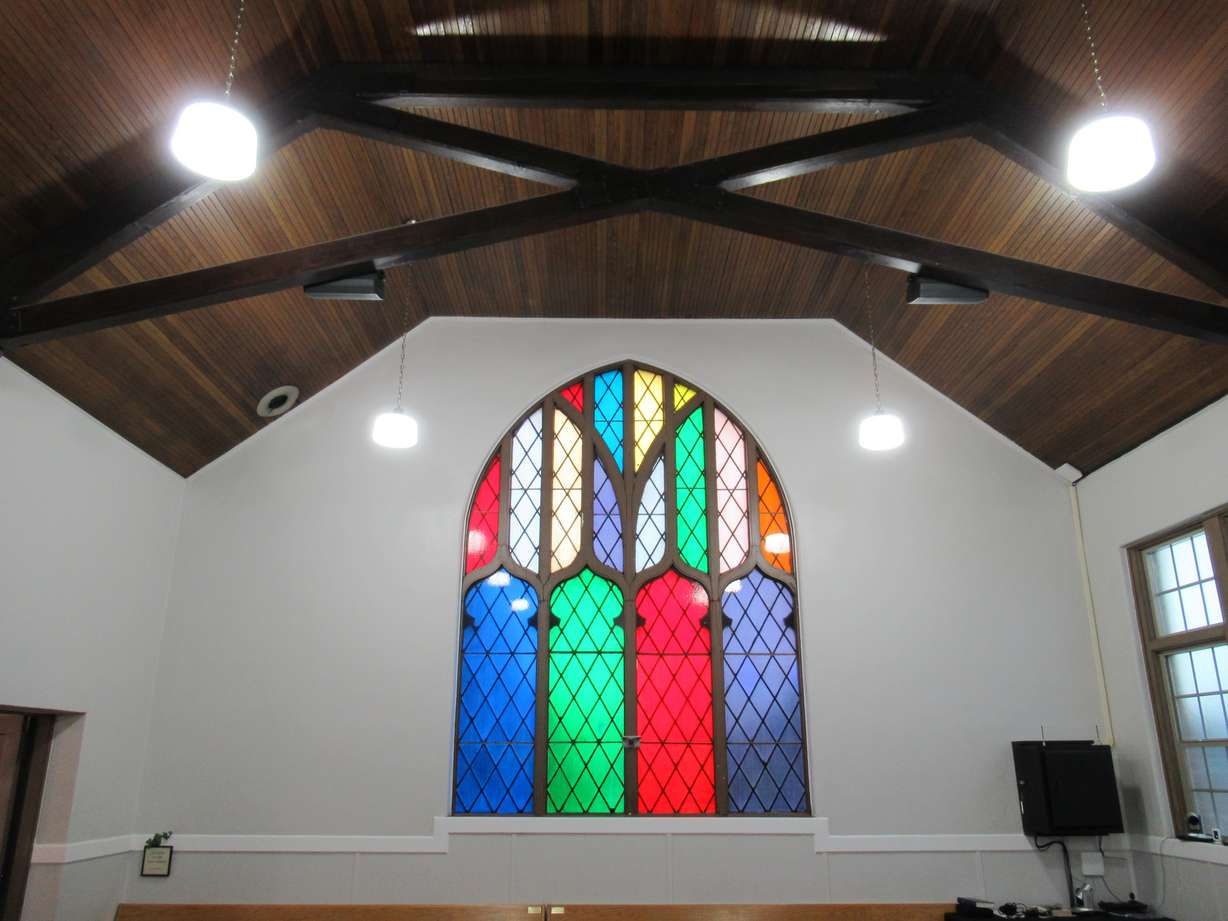
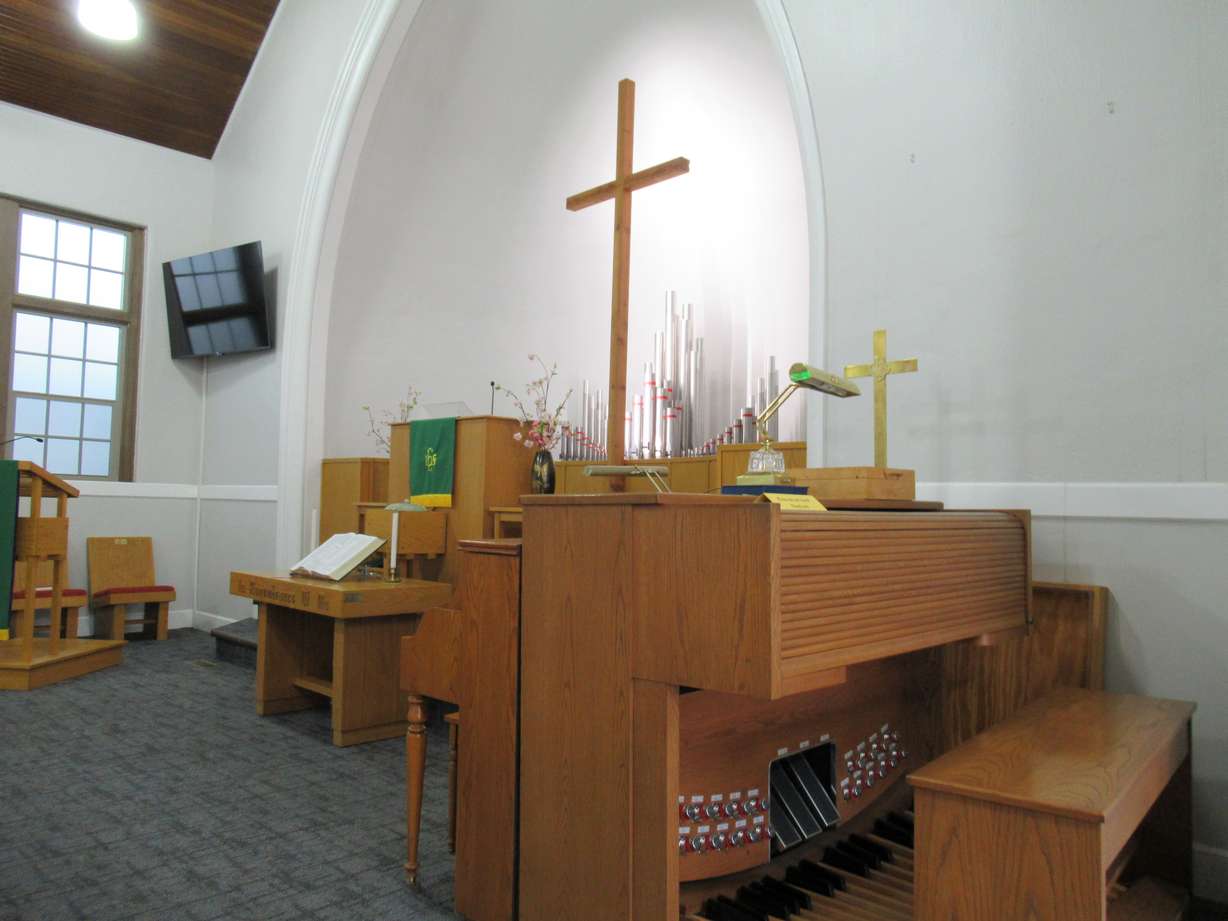
The right wall of the sanctuary, when facing the pipe organ, was originally open to a smaller side room, according to Fleishman. He said the smaller side room was temporarily closed off from the sanctuary for several years, but the dividing wall has since been removed.
Behind the building, a small courtyard stretches toward a separate building that houses the church's offices, a kitchen and a large community space.
The concrete courtyard was recently redone, uncovering an old horseshoe that was buried beneath it. Fleishman believes that the location may have been used as a stable before it was purchased and the church built there.
Looking to the future
While no plans are in the works, Fleishman said it would be "amazing" to try to expand the current building to attract more worshippers.
"We're dreaming big," Fleishman said. "One thing would be maybe, somehow, someway expand on this amazing corner, which is like the last bastion of Japantown Street ... and then seeing what may come. It's a fun spot."
The corner in question currently houses a building that Fleishman said has been empty for at least two years. Purchasing the building is outside the church's budget, but Fleishman said it was "nice" that it provided a buffer between the church and the traffic on 300 West.
"I think the unknown is truly, very much at the front of the minds and the hearts of the whole community," Fleishman said. "The extended Japantown community, the Buddhist Temple (Japanese Church of Christ), we want to do our best to make sure to preserve it."