'%3e%3cpath%20d='M34.1406%205.85938C30.3906%202.10547%2025.3047%200%2020%200C14.6953%200%209.60938%202.10547%205.85938%205.85938C2.10938%209.61328%200%2014.6953%200%2020C0%2025.3047%202.10547%2030.3906%205.85938%2034.1406C9.61328%2037.8906%2014.6953%2040%2020%2040C25.3047%2040%2030.3906%2037.8945%2034.1406%2034.1406C37.8906%2030.3906%2040%2025.3047%2040%2020C40%2014.6953%2037.8945%209.60938%2034.1406%205.85938ZM37.0117%2023.543H31.1602V13.5391H27.6328V19.9414C28.1211%2020.6914%2028.3711%2021.582%2028.3711%2022.5625V22.625C28.3711%2023.668%2028.1172%2024.6055%2027.6328%2025.4297V26.6094H36.082C33.4883%2032.9375%2027.2891%2037.3789%2020.0039%2037.3789C10.3711%2037.3789%202.62109%2029.6289%202.62109%2020C2.62109%2010.3711%2010.3711%202.62109%2020%202.62109C29.6289%202.62109%2037.3789%2010.3711%2037.3789%2020C37.3789%2021.1484%2037.2617%2022.2656%2037.0508%2023.3477C37.0391%2023.4141%2037.0234%2023.4766%2037.0117%2023.543Z'%20fill='white'/%3e%3cpath%20d='M22.3086%2018.5352C20.4336%2018.125%2019.9531%2017.8398%2019.9766%2017.1836V17.1406C19.9766%2016.6992%2020.3477%2016.2148%2021.4023%2016.2148C22.582%2016.2148%2023.8867%2016.6797%2025.0781%2017.4766L26.8516%2015.0195C25.4453%2013.8906%2023.707%2013.3398%2021.5547%2013.3398C18.5195%2013.3398%2016.4375%2015%2016.4063%2017.4766V17.5352C16.3633%2020.2617%2018.5859%2020.9805%2021.293%2021.6016C23.0391%2021.9766%2023.5703%2022.3164%2023.5703%2022.9609L23.5469%2022.9766C23.5469%2023.3906%2023.2578%2023.7031%2022.7852%2023.8359C22.5742%2023.9062%2022.1289%2023.9727%2021.5156%2023.9727C20.7617%2023.9727%2019.7539%2023.8633%2018.6328%2023.4844C18.0898%2023.2891%2017.4727%2023.0039%2016.8047%2022.6133L20.1406%2026.625C20.2813%2026.6602%2021.0977%2026.8516%2021.7734%2026.8516C25.0039%2026.8516%2027.0859%2025.2461%2027.1094%2022.6328V22.5703C27.1602%2020.1133%2025.2148%2019.1719%2022.3086%2018.5352Z'%20fill='white'/%3e%3cpath%20d='M5.24219%2013.5664V26.6133H8.75391V23.7578L10.2969%2021.9531L14.2031%2026.6133H18.3867L12.3555%2019.5195L17.4023%2013.5664H13.4531L8.75391%2019.0586V13.5664H5.24219Z'%20fill='white'/%3e%3c/g%3e%3cdefs%3e%3cclipPath%20id='clip0_97_2430'%3e%3crect%20width='40'%20height='40'%20fill='white'/%3e%3c/clipPath%3e%3c/defs%3e%3c/svg%3e)




- Utah wildlife biologists use rotenone in Mill Creek to protect native fish.
- The project sparked social media concerns over rotenone's safety for humans and wildlife.
- Officials assure public of safety, citing EPA guidelines and transparent communication efforts.
MILLCREEK — Utah wildlife biologists wrapped up a project this week to enhance native habitat for Bonneville cutthroat trout in Salt Lake County, but not before it stirred up a bit of a social media buzz.
The Utah Division of Wildlife Resources began using rotenone earlier this week in a 3.1-mile segment of Mill Creek, stretching from Church Fork in Millcreek Canyon down to the I-215 bridge crossing in the eastern valley.
Utah and other western states have used rotenone for fisheries projects for decades, largely when it's too difficult to physically remove invasive fish that have entered a habitat. The substance, which comes from roots of a tropical plant in the bean family, is a respiratory toxin to fish, helping clear out unwanted fish, and has historically been considered not dangerous to people, pets or other wildlife in low quantities.
That was the case with Mill Creek, said Chris Crockett, the division's central region aquatics manager.
Brook trout were found in the creek, threatening the creek's native fish. It's unclear how brook trout got there, but state wildlife biologists believe they were introduced by someone who illegally dumped the fish in the creek, and they took off from there.
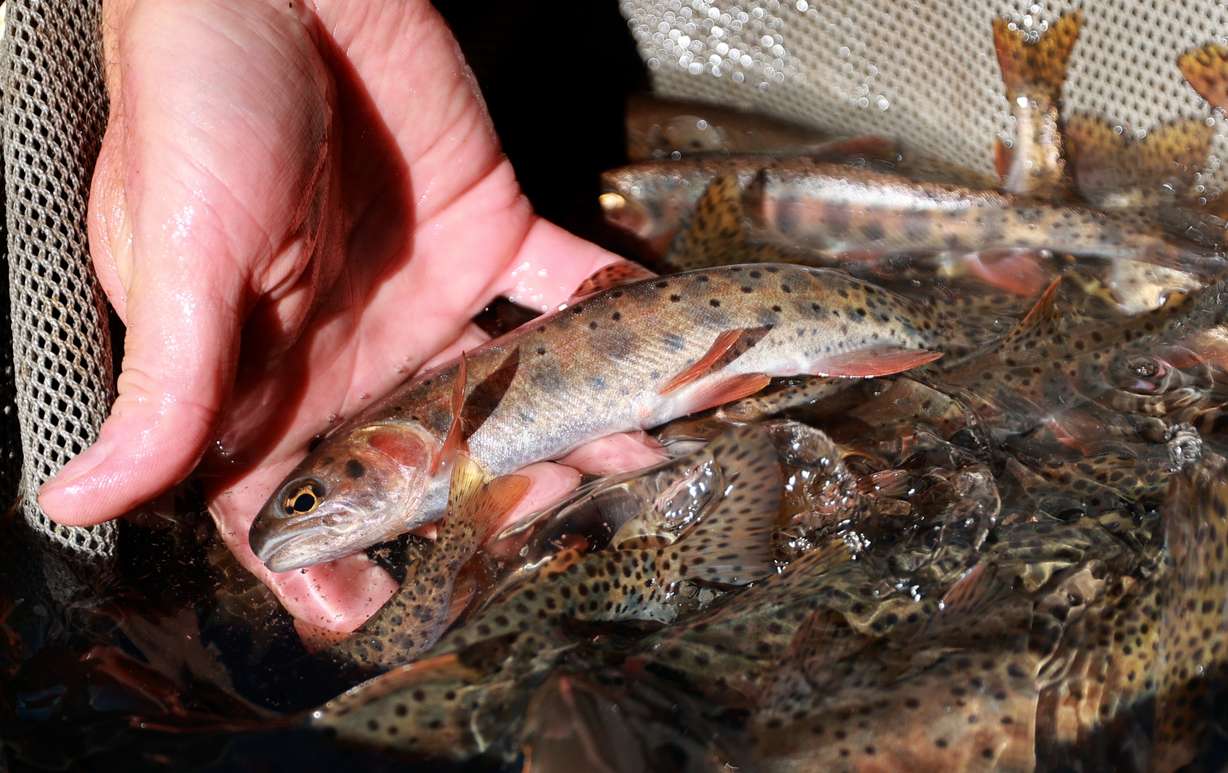
"(Rotenone) has a time and a place. We were trying a few other tools in our toolbox through mechanical removal of brook trout," Crockett told KSL, adding that biologists collect as many Bonneville cutthroat trout as possible that are returned to the creek once the substance quickly clears out.
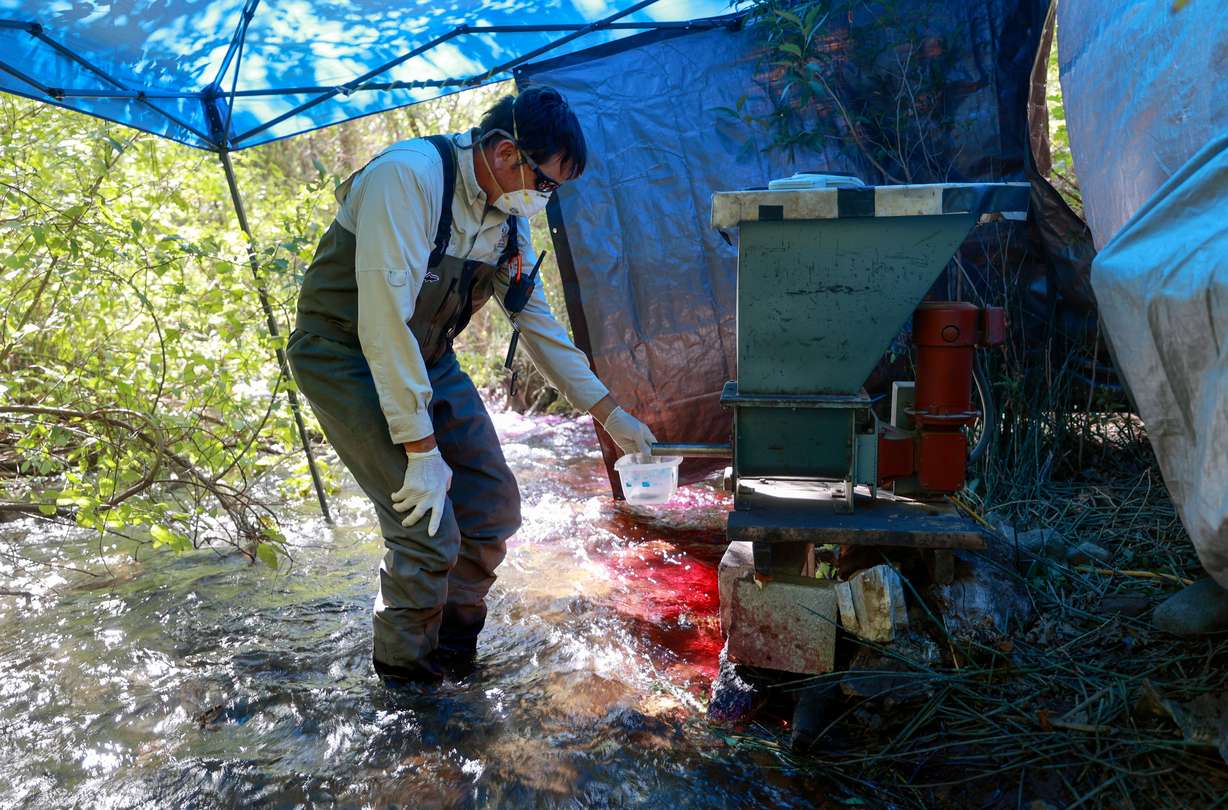
A neutralizing agent that briefly turns the water purple is also used in the process.
While it's been used for decades, concerns began pouring in online as the project commenced. One Instagram user, describing themselves as an avid angler, posted about the project, which they found unsettling, writing in part that it "isn't safe for humans."
"Rotenone has been shown to have greatly increased risk of Parkinson's," the user wrote, in a post that garnered thousands of likes. "There is a whole list of other toxic chemicals that are used in this poisoning process. And little research has been done to see the full effect on humans and ecosystems."
That was among other concerns, such as the impact on other aquatic wildlife. A few other recent social media posts have brought up similar worries with other state projects using rotenone, urging people to call the division to stop the process.
Rotenone and other pesticides seemingly increase the risk of developing the disease, per a 2025 study partially funded by the American Parkinson Disease Association. The organization, however, also noted this year that the higher risk of developing the disease is tied to "long-term or high-level exposure" to certain pesticides, like rotenone.
It's unclear what the exact dose amount and exposure duration are needed to increase the risk, the organization also pointed out. It also points out there's nothing that has proven it causes the disease.
Other recent studies tying rotenone exposure to Parkinson's disease have been "inconclusive," wrote the Alaska Department of Fish and Game, which is among the states that use it to address invasive species.
The Utah Division of Wildlife Resources says it uses "extremely diluted liquid concentrations" of less than 50 parts per billion, using levels that are permitted by the Environmental Protection Agency. The amount is far less than what studies focus on, and the agency goes through training to understand concentration rates and safety risks, Crockett added.
"We're following explicitly the label requirements," he said. "We follow that to a T. ... I feel very comfortable and confident that those are safe."
The division coordinated with the U.S. Forest Service, the U.S. Fish and Wildlife and Trout Unlimited on the Mill Creek project. It also alerted residents who might be affected, while also messaging the project through an Aug. 18 news release and working with Salt Lake County officials.
Signs urging people to avoid the water as a precaution were placed alongside the creek.
State wildlife biologists are hopeful that the project will clear out the brook trout as the process to return Bonneville cutthroat trout began on Wednesday. They'll continue monitoring the creek for brook trout, but a second round of treatment could be conducted next year.
They urge people not to release a species that isn't approved for a body of water to avoid needing to use rotenone. When they do turn to it, Crockett said the division will try to clarify any confusion out there.
"We're trying to be very transparent," he said. "We are trying to make sure the public knows what we're doing and why we are doing it."