
Estimated read time: 2-3 minutes
This archived news story is available only for your personal, non-commercial use. Information in the story may be outdated or superseded by additional information. Reading or replaying the story in its archived form does not constitute a republication of the story.
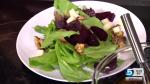
Beet Salad with Goat Cheese (adapted from allrecipes.com)
A beet salad is a great way to incorporate more nitrates, and more veggies, into your diet!
Ingredients:
- 4 medium beets, cut in half
- 1/3 cup chopped walnuts
- 2 tablespoons maple syrup
- 10 oz mixed baby salad greens, or other greens of choice
- ½ cup frozen orange juice concentrate, or Harmons fresh squeezed orange juice
- ¼ cup Harmons balsamic vinegar
- ½ cup Harmons olive oil
- 2 oz goat cheese (from cheese monger)
Instructions:
1. Set beets into saucepan on stove with enough water to cover them. Bring contents to a boil and cook for about 20 minutes or until tender. Drain the saucepan and let beets cool. After they have cooled, cut into bite size cubes.
2. As beets cook, place walnuts in a skillet at medium heat. Heat until warm, then stir in the maple syrup. Stir until evenly coated and remove from heat to cool.
3. In a bowl, combine the orange juice concentrate (or juice), balsamic vinegar, and olive oil and whisk.
4. To serve, place the baby salad greens on a plate and top with walnuts, beets, and goat cheese. Add dressing as desired.
Q: Why should we eat beets?
- Beets are a good source of nitrates!
- Once we consume nitrates, in the form of beets, the body converts them to nitric oxide.
- Nitric oxide is beneficial in dilating blood vessels, lowering resting blood pressure and overall increasing blood flow to tissues throughout the body.
- Also, nitric oxide lowers the oxygen (O2) cost of exercise, allowing the body to be more efficient due to the reduced use of O2. Meaning, we can work harder, longer.
- Thus, consuming nitrates may enhance performance.
Q: When should athletes consume beets?
- Consider eating nitrates several days before event (2-15 days).
o Steady doses of beetroot juice varied between 140 mL and 500 mL per day for several days (2-15 days) before the event
- Consuming whole beets?
o Try 2-3 hours before exercise (if tolerated)
- Consuming beetroot juice?
o Try 1½ to three hours ahead of the event
Q: Who benefits most?
- Research suggests athletes might benefit most who perform activities 5-30 minutes in duration
- Recreational athletes may benefit more than highly trained endurance athletes due to amounts of oxygen availability.
- It is important to remember everyone will react differently!
Are there other good things about beets?
- Beets are a great source of nutrition containing contain fiber, vitamins, minerals (vitamin C, potassium)
Don’t like beets? No worries, try:
- Green leafy vegetables are also a good source of nitrates. Try salads with lettuce, spinach, celery, and arugula!